Twitter Updates

    follow me on Twitter

    Wednesday, February 27, 2008

    God's Own Baby-Killers?

    Much food for thought and cause for concern...your reaction?

    Gurinder Shahi

    -----

    God's Own Baby-Killers: Abortions Soar Where Religious Zeal Abounds

    by Chris Floyd

    Countries with the most fervent religious faith have the greatest number of abortions. This stems directly from one of the primary aims of organized religion: the control of women, especially their fertility.

    Tuesday, 26 February 2008—
    George Monbiot reports on a study revealing -- surprise, surprise! -- that countries with the most fervent religious faith have the greatest number of abortions.

    As Monbiot notes, this stems directly from one of the primary aims of organized religion: the control of women, especially their fertility. The zealous pursuit of this goal leads to rejection of contraception and sex education, which in turn gives rise to more unwanted pregnancies -- hence more abortions. In fact, studies show that the country with perhaps the most "liberal" and "permissive" sexual policies -- the Netherlands-- has the lowest rate of abortion in the world. Monbiot:

    A study published in the Lancet shows that between 1995 and 2003, the global rate of induced abortions fell from 35 per 1,000 women each year to 29. This period coincides with the rise of the "globalised secular culture" the Pope laments. When the figures are broken down, it becomes clear that, apart from the former Soviet Union, abortion is highest in conservative and religious societies. In largely secular western Europe, the average rate is 12 abortions per 1,000 women. In the more religious southern European countries, the average rate is 18. In the US, where church attendance is still higher, there are 23 abortions for every 1,000 women, the highest level in the rich world. In central and South America, where the Catholic church holds greatest sway, the rates are 25 and 33 respectively. In the very conservative societies of east Africa, it's 39...

    I am not suggesting a sole causal relationship: the figures also reflect changing demographies. But it's clear that religious conviction does little to reduce abortion and plenty to increase it. The highest rates of all -- 44 per 1,000 -- occur in the former Soviet Union: under communism, contraceptives were almost impossible to obtain. But, thanks to better access to contraception, this is also where the decline is fastest: in 1995 the rate was twice as high. There has been a small rise in abortion in western Europe, attributed by the Guttmacher Institute in the US to "immigration of people with low levels of contraceptive awareness". The explanation, in other words, is consistent: more contraception means less abortion.

    There is also a clear relationship between sex education and falling rates of unintended pregnancy. A report by the United Nations agency Unicef notes that in the Netherlands, which has the world's lowest abortion rate, a sharp reduction in unwanted teenage pregnancies was caused by "the combination of a relatively inclusive society with more open attitudes towards sex and sex education, including contraception". By contrast, in the US and UK, which have the developed world's highest teenage pregnancy rates, "contraceptive advice and services may be formally available, but in a 'closed' atmosphere of embarrassment and secrecy"....The more effectively religious leaders and conservative [media] anathemise contraception, sex education and premarital sex, the higher abortion rates will go.

    Monbiot also points out that while these attitudes cause much suffering in rich nations, "it doesn't compare to the misery inflicted on the poor":

    Chillingly, as the Lancet paper shows, there is no relationship between the legality and the incidence of abortion. Women with no access to contraceptives will try to terminate unwanted pregnancies. A World Health Organisation report shows that almost half the world's abortions are unauthorised and unsafe. In East Africa and Latin America, where religious conservatives ensure that terminations remain illegal, they account for almost all abortions. Methods include drinking turpentine or bleach, shoving sticks or coathangers into the uterus, and pummelling the abdomen, which often causes the uterus to burst, killing the patient. The WHO estimates that between 65,000 and 70,000 women die as a result of illegal abortions every year, while 5 million suffer severe complications. These effects, the organisation says, "are the visible consequences of restrictive legal codes".

    Monbiot goes on to note something we have been condemning here and elsewhere for years: that the supposedly "pro-life" policies of George W. Bush and his ideological fellow travellers are directly responsible for killing thousands of the most vulnerable people on earth. As Monbiot says:

    When the Pope tells bishops in Kenya -- the global centre of this crisis -- that they should defend traditional family values "at all costs" against agencies offering safe abortions, or when he travels to Brazil to denounce its contraceptive programme, he condemns women to death. When George Bush blocks aid for family planning charities that promote safe abortions, he ensures, paradoxically, that contraceptives are replaced with backstreet foeticide. These people spread misery, disease and death. And they call themselves pro-life.

    I first wrote about this issue in 2003, after Bush had cut off funding to family planning services and health clinics all over the world to stoke the zeal of his religious base. Nothing much has changed. As I wrote then:

    The defining issue of modernity is control of women's fertility. It is this question – more than religion, politics, economics or the "clash of civilizations" – that forms the deepest dividing line in the world today. It is a line than cuts through every nation, every people, from the highest level of organized society down to, in many cases, the divided minds and emotions of individual men and women.

    Control of fertility – and its active principle, sexuality – has always been an organizing principle of human society, of course, but modernity has presented the world with a revolutionary concept that overthrows millennia of received wisdom and tradition: namely, that an individual woman should control her own fertility. This notion destabilizes state structures and religious dogmas, and uproots cultural mores whose origins reach back to prehistoric times. It is a profoundly disturbing development in the life of humankind.

    Little wonder, then, that anxieties over fertility and sexuality are the chief engines driving the frenzied and increasingly violent fundamentalist movements now sweeping through the world. It is here that extremists of every stripe make common cause against modernity. Almost every other aspect of "the modern" – science and technology, high finance, industrialization, etc. – has been absorbed, in one form or another, by the most "traditionalist" societies. But what today's fundamentalists – from Osama bin Laden to George W. Bush to Pope John Paul II, from the American-backed warlords of Afghanistan to the anti-American mullahs of Iran – cannot accept, at any cost, is the freedom of a woman's body.

    This frenzy, this primitive fear – understandable perhaps in the face of such a wrenching upheaval – does not in itself make a fundamentalist an evil person. But it can – and does – lead them into evil: sometimes blindly, in ignorance and panic; but sometimes knowingly, with eyes wide open, a willing embrace of primitive emotions to serve selfish and cynical ends.

    And so: last month, George W. Bush quietly cut off funding for a highly praised AIDS program for refugees from Africa and Asia. Why? Obviously, to keep his helots on the Christian Right frothing with passion to do battle for him in 2004. He has already given them control of American social policy, particularly in international negotiations, where they routinely form alliances with Iran, Sudan, Saudi Arabia and other repressive states to derail treaties on women's rights.

    But what was his public reason? Bush says he gutted the program because one member of the non-profit consortium running the project is also working with a UN program that was falsely accused of colluding with China's policy of forced abortions. That charge was investigated not once but twice by Bush's own State Department, as well as by the UN, and was shown each time to be completely untrue. The only "evidence" produced to support the slander was an allegation that in a single office in a rural Chinese province a few years ago, the desk of a UN official touched the desk of a Chinese Health Ministry official. That's it. The truth, of course, is that the UN program, and all the non-profit organizations associated with it, are trying to end China's forced abortions.

    Of course, this heinous practice that has never stopped Bush from granting massive trade benefits to the "baby-killing Communists." Nor has it ever disturbed the orgy of investment in China's repressive regime by the corporate barons of the U.S.-China Chamber of Commerce, headed by that genial old aristocrat, Prescott Bush Junior – known as "Uncle Prescott" to the current president. Naturally, any punishment for China's forced abortions must not fall on the Beijing government itself – not when Uncle Press has choice deals on the line. No, instead it must land – like a ravening MOAB – on the poorest of the poor, in Angola, Congo, Rwanda, Somalia, Eritrea, and other poverty-stricken areas where the Bush family has no investments.

    Not content with slapping AIDS-stricken refugees around, Bush has also cut off all U.S. funding to countless family planning services in the poorest regions of the world. This ban applies to any clinic that so much as mentions abortion as an option to its clients, even if it doesn't provide abortions or referrals itself – and even if the woman has been raped (perhaps by the goons of a Bush-backed warlord), even if she will die in childbirth. A clinic will also be cut off if its workers take part in lobbying campaigns to secure legal abortion in their countries. Such rights, hard-won by Western women, are to be denied to the world's poor. (Meanwhile, Bush's helots are scheming to roll them back in America as well.)

    Many of these clinics provide the only maternal and post-natal care available for millions of destitute women and their children. They are the only place where the world's most downtrodden and uneducated women can receive information about reproduction and birth control, or treatment for AIDs, genital mutilation and rape. All across Africa and Asia, these clinics – including many run by Bush's beloved "faith-based organizations" – are closing up as they lose their American funding. Yet this funding itself is a mere pittance from the war-fattened federal purse – less than one day's spending on Bush's rape of Iraq.

    It is simply a fact that thousands of women and infant children will die needless deaths in the coming years because of Bush's edicts. He could have saved them; instead he has killed them. He has chosen to stand with terrorists and tyrants in the fundamentalists' war against women.


    photo of Chris FloydChris Floyd has been a writer and editor for more than 25 years, working in the United States, Great Britain and Russia for various newspapers, magazines, the U.S. government and Oxford University. Floyd co-founded the blog Empire Burlesque, and is also chief editor of Atlantic Free Press. He can be reached at cfloyd72@gmail.com.

    "Abortion Tourism": The Sad Reality...

    What is your perspective on "Abortion Tourism" as a global public health concern?

    Gurinder Shahi

    ----

    "Abortion Tourism" Sheds Light on the Need for Health Care Access

    By Marcy Bloom, RH Reality Check. Posted February 25, 2008.


    Anti-choicers panic over "abortion tourism," but only the most privileged women can escape local "pro-life" laws. The rest simply suffer.

    abortionrallymexicocity


    Recent coverage of the abortion providers' strike in Spain and the attacks on women's clinics there made use of the term "abortion tourism." LifeSiteNews, an anti-choice web site, refers to Barcelona, Spain as "Europe's abortion mecca, where people from all over the continent can travel to evade restrictions on late-term abortions." There was also sensationalist media coverage in Spain with disparaging references to "abortion tourists from other countries."

    In November of 2007, LifeSiteNews also reported that "foreign women will be allowed to have abortions in Sweden up to 18 weeks gestation starting in January 2008 under changes to legislation passed by the Swedish parliament ... Until now, abortion in Sweden has been reserved for Swedish citizens and residents, but since most European Union countries already allow foreign women access to abortion, the Swedish government has decided to follow suit ... Several Christian Democrat members of parliament have warned that the new law could lead to 'abortion tourism'."

    There has always been abortion tourism. The term refers to travel undertaken in order to access to safe abortion care -- which is a long-standing crisis in the US as well as internationally.

    In her May 2003 report "Envisioning Life Without Roe: Lessons Without Borders," the Guttmacher Institute's Susan Cohen provided some relevant history:

    New York legalized abortion, without a residency requirement, in 1970, which immediately put New York City on the map as an option for those women who could afford to travel. Before that it was an open secret that affluent American women would travel to London to obtain safe, legal procedure.

    As a young woman growing up in New York City in those years, I vividly remember many pregnant friends who also went to Mexico, Sweden, Japan, and Puerto Rico for their safe abortions. Of course, it was, as Cohen notes, "poor women, mostly young and minority, who [could not travel and] suffered the health consequences [of unsafe, illegal abortions], and maternal mortality rates were high. Women of means had more options."

    Tragically, not much has changed. The race, ethnic, and class disparities of abortion access in the US are well-known and this theme is universal.

    In October 2007, the Global Safe Abortion Conference in London discussed this issue in the context of "abortion journeys" -- the long, distressing, often expensive journeys that women are forced to undertake in order to access safe abortion due to restrictive legislation in their home countries. Writing about the discussion at the conference, Grace Davies noted, "These journeys -- abortion tourism -- are a tragic reality for women around the world, from Kenya to Poland. In fact, the term ‘abortion tourism' highlights one of the central characteristic of the phenomenon. In highly restrictive situations, class and socio-economic status play a huge role in whether or not a woman can access safe abortion."

    The examples presented at the Global Safe Abortion Conference were instructive -- and heart-breaking. At the conference, Claudia Diaz Olavarrieta reported on the research she had conducted in Mexico before the landmark decision of last April legalizing abortion in Mexico City. She reported that "Mexican women traveling to the US for safe abortion care were typically well-educated and wealthy, did not cross the border illegally, and as such did not have to resort to unsafe clandestine or self-induced attempted abortions...they also typically came from wealthier [more cosmopolitan] Mexico City rather than poorer northern and eastern states."

    "The girls with money go off to Europe or to the US and come back just fine from their ‘appendix operations,' but the poor girls are subjected to all kinds of barbarities," stated a passionate supporter of legal abortion in Mexico City at the time that the momentous new law was being passed. Meanwhile, an opponent of the new life-saving law angrily stated that "people from all over the country will be coming [to Mexico City] for abortions. It's going to be abortion tourism. It will be chaos."

    Perhaps the opponent of the new law should be asking why women are forced to travel to Mexico City for their safe abortions. Is it because of sexist laws and attitudes about women that make it impossible for them to obtain safe medical care in their own pueblos and communities? Could it be that these woman and girls are "simply" trying to save their lives, health, families, and futures?

    Similar issues surrounding abortion tourism in Ireland were also explored at the conference. According to the Irish Family Planning Association and the Safe and Legal Abortion Rights Campaign in Ireland, "approximately 200 women per week travel to the United Kingdom from Ireland and Northern Ireland," where abortion is greatly restricted and virtually illegal. "Economics play a part ... abortion remains a class issue," emphasized Goretti Horgan of Alliance for Choice Northern Ireland.

    A minimum of 1000, 000 Irish women have been compelled to travel to England for abortions over the last 20 years.

    At a 1996 workshop on reproductive freedom held at a conference at the University of Connecticut School of Law, Ursula Nowakowska of Poland reported on the effects of her country's 1993 anti-abortion law. The law, "permitting abortions only if the life of the mother was seriously threatened or if there was severe deformation of the fetus," is essentially a farce, an insult, and a danger to women's lives and dignity, as are the restrictive anti-abortion laws in other countries. "[W]omen have gone to Western Europe or further east to obtain abortions," she said -- Poland's version of abortion tourism. "Most Polish women go to Poland's East and South neighboring countries: Ukraine, Lithuania, Russia, Bielorus, Czech Republic, and Slovakia ... Fewer women can afford to seek abortion care in Western countries, as the abortion services there are more expensive, but the care is of much higher quality." Polish women who have the financial resources go to Germany, Belgium, and Austria. A February 2008 report posted in the ASTRA bulletin on sexual and reproductive rights indicated that at least 31,000 Polish women underwent abortions in the United Kingdom in 2007, a 30 percent jump in the number of Polish women from recent years.

    Yet another example is Portugal. Portugal decriminalized first-trimester abortion last year, leading to the easing of one of Europe's most restrictive abortion laws. It is estimated that some 20,000 illegal abortions take place every year, and thousands of women end up in hospitals with complications. Not surprisingly, many thousands of women instead choose to cross the border to more liberal Spain -- abortion tourism for Portuguese women. Figures for the number of women who left the country in recent years to access safe abortion care aren't available, although in 2006, a single Spanish clinic near the Portuguese border saw 4,000 Portuguese women come in to terminate pregnancies.

    In the United States, despite the legalization of abortion 35 years ago and where restrictions on abortion are nothing short of a war against women's lives, access to abortion has been severely eroded -- leading to the current US version of abortion tourism. According to the National Abortion Federation, "88 percent of all US counties have no identifiable abortion provider. In non-metropolitan areas, the figure rises to 97 percent. As a result, among many other barriers to safe abortion care, nearly a quarter of US women wanting abortions have to travel 50 miles or more to reach the nearest abortion provider." During my 18 years as the executive director of Aradia Women's Health Center in Seattle, Washington, our clinic consistently saw women from throughout the state, as well as Alaska, Idaho, Wyoming, Montana, Iowa, Texas, California, Oregon, and Mexico.

    As a response to these ongoing problems, the innovative Abortion Access Project has launched the Least Access States Initiative, targeting women in Mississippi, Kentucky, West Virginia, and Arkansas, who "share a troubling commonality -- they all live in states with the least accessible abortion services in the US." This is admirable and difficult work, as it will be daunting to ensure that women of these least-served states are eventually able to more freely exercise their rights.

    So who dies from lack of abortion access? Who suffers? Who is forced to continue an unwanted pregnancy, or desperately turns to underground, unscrupulous, and deceptive clinics? Who cannot become an "abortion tourist" and travel within or outside of one's country for safe abortion care? The universal theme is clear -- it is disproportionately women or girls who are young and/or poor, indigenous, of color, an immigrant, a refugee, and/or geographically isolated. It is only women with fiscal resources who are able to travel the long distances to another state or country for safe abortion care.

    The current abortion laws of many countries are completely inadequate to meet the needs of women and girls seeking safe abortion care. Therefore, pregnant women and girls who are able to do are virtually forced to become abortion tourists. Although the term is often used in sexist and disparaging ways, what it really points to is that women's reproductive health needs are being ignored. Women are too frequently being deprived of their right to access safe, compassionate, and professional abortion services close to home, or at the very least in their own state or country.

    So our work goes on. We must continue to strive to liberalize abortion laws, reduce restrictions, destigmatize abortion -- to view abortion as a human right and a moral choice for all women and girls -- and must increase the pool of trained and compassionate abortion providers. We must continue the struggle to ensure that women and girls, of every class, race, and country, truly have access to safe, legal, timely, local, and community-based abortion care.


    Marcy Bloom has long been a leader in safeguarding the fundamental right to reproductive freedom. Bloom served for 18 years as the executive director and guiding force of the Aradia Women’s Health Center, Seattle’s first nonprofit abortion and gynecological health center, and a model for clinics nationwide. In 2006, she won the William O. Douglas Award, the ACLU of Washington’s highest honor. She now works with the Mexico-City based organization GIRE - El Grupo de Informacion en Reproduccion Elegida/The Information Group on Reproductive Choice. GIRE seeks to decriminalize and destigmatize abortion and works toward the expansion of reproductive justice and respectful, safe reproductive health services for all the women of Latin America.

    Tuesday, February 26, 2008

    When Capitalism Meets Charity...

    Social entrepreneurship at its best...

    Gurinder Shahi

    ----

    A Capitalist Jolt for Charity

    Sandy Huffaker for The New York Times

    EPals has for-profit and nonprofit arms. Candace Pauchnick, standing, uses its tools in her class.

    Article Tools Sponsored By
    Published: February 24, 2008

    IN the summer of 2005, Miles Gilburne and Nina Zolt had long talks over dinner in their Washington home about what to do next. For more than six years, Mr. Gilburne, a former AOL executive, and his wife, Ms. Zolt, a former lawyer, had supported a philanthropy that used books and online tools to enhance skills of inner-city students.

    Skip to next paragraph
    Doug Kanter/Bloomberg News

    Bill Gates of Microsoft and Muhammad Yunus, who won a Nobel for his microfinance venture, have been pioneers in harnessing business means for socially conscious ends. The Gates Foundation treats its grants like venture capital investments.

    The program, which Ms. Zolt directed, had been moderately successful. Students liked writing online about books and sharing their ideas with Internet pen pals, including adult mentors. Many teachers embraced the project, called In2Books, and participating students outscored their peers in standardized tests.

    Still, the costly venture grew only gradually, classroom by classroom. The couple had put $10 million into the charity, a “meaningful portion” of the family wealth, Mr. Gilburne says. “It was enough money that I did lie awake at night thinking about the size of the checks,” he recalls.

    As philanthropy, the couple’s efforts, however worthwhile, weren’t sustainable. But their vision of using the Internet for communication and collaboration to improve education has taken on a new life — as a business.

    Today, the once-struggling venture has morphed into a primarily for-profit enterprise. And the striking transformation of In2Books is emblematic of a larger trend: charities are changing their spots and making use of some of capitalism’s virtues.

    The process is being pushed forward by a new breed of social entrepreneurs who are administering increasing doses of bottom-line thinking to traditional philanthropy in order to make charity more effective.

    To make a fresh start, Mr. Gilburne attracted like-minded angel investors, and at the end of 2006 the group bought a for-profit company, ePals Inc., to expand on the original mission and support the foundation. The ePals company has grown and now offers classroom e-mail, blogs, online literacy tools and Web-based collaborative projects on subjects like global warming and habitats.

    EPals says 125,000 classrooms around the world are using at least some of its free tools, reaching 13 million students, and its ambition is to become a global “learning social network.”

    National Geographic is to announce this week that it is investing in ePals, based in Herndon, Va., and will supply educational content for the ePals learning projects. Worldwide distribution should get a lift from Intel, which will soon ship its Classmate laptops, designed for students in developing nations, with the ePals icon on the screens. And ePals is also offered for use on the low-cost computers from One Laptop Per Child, a nonprofit group trying to bring the content and experience of the Internet to children in developing countries worldwide.

    Various versions of efforts like this are appearing across the philanthropic landscape as business-minded donors, epitomized by Bill and Melinda Gates and their foundation, have treated their charitable contributions more like venture capital investments. They seek programs that can be catalysts for broad changes in fields like health, education and the environment, they measure performance and results, and they encourage nonprofits to become more self-sustaining.

    Yet to have the greatest possible impact, a further step down the capitalist road is sometimes needed, analysts and others in the field say. Muhammad Yunus, the microfinance pioneer and Nobel laureate, calls this next step the “social business.” The goal, according to Mr. Yunus, is to create ventures that more than pay for themselves — in other words, turn a profit.

    Social business entrepreneurs, he writes, can help “make the market work for social goals as efficiently as it does for personal goals.”

    PHILANTHROPIES are discovering that for-profit status and financing can be a useful tool. For example, many microfinance lenders, modeled after Mr. Yunus’s project, the Grameen Bank in Bangladesh, aim to make the crossover to profit-making institutions.

    Mozilla, the nonprofit foundation that developed the open-source Web browser Firefox, decided that it needed a for-profit unit to accelerate its business activities and gain market share against Microsoft’s Internet Explorer. The business unit is freer to spend on marketing, charge for software service and technical support, and pay to compete for engineering talent in Silicon Valley.

    Likewise, Google.org, the search giant’s corporate foundation, chose for-profit status to be able to easily make investments in for-profit companies including alternative energy start-ups like eSolar and Makani Power.

    “Capitalism is a very mutable, flexible beast, and what we’re seeing is social entrepreneurs addressing some of these social challenges in profoundly different ways than traditional nonprofit organizations,” said John Elkington, co-author with Pamela Hartigan of “The Power of Unreasonable People: How Social Entrepreneurs Create Markets that Change the World,” a new book that was handed out last month to attendees at the World Economic Forum in Davos, Switzerland.

    Even among its hybrid peers, ePals has evolved into an unusual combination of a business and a social venture. When Mr. Gilburne and Ms. Zolt established the for-profit arm in 2006, they attracted like-minded investors, acquired ePals Inc. and began hiring talented staff. They gave the original education foundation a 15 percent stake in the ePals company, and its endowment will grow if the business prospers. The nonprofit division is focusing on educational research and bringing technology into classrooms.

    But the company is where the action is. “This needs to be a large business to have a really significant social impact,” Mr. Gilburne said. “We couldn’t do what we’re doing as a nonprofit.”

    Very few nonprofits get big. Only 144 of the more than 200,000 nonprofits established since 1970 had grown to $50 million or more in revenue by 2003, according to a study published last year by the Bridgespan Group, a nonprofit consulting firm that advises philanthropies.
    Skip to next paragraph

    The XO machine from One Laptop Per Child, left, and the Intel Classmate PC feature ePals services, which connect students and classrooms worldwide.

    Doug Mills/The New York Times

    Edmund Fish, C.E.O. of ePals, says “a learning social network is not an oxymoron.”

    Doug Mills/The New York Times

    Miles Gilburne and Nina Zolt are the force behind the firm.

    With the rising influence of social entrepreneurs in philanthropy, many nonprofits have sought to generate revenue to become more self-sustaining. But it is still rare for a nonprofit to cross the chasm to become mainly a profit-seeking business, as in the ePals experience.

    “It’s tricky, but it makes sense when the business is highly aligned with the mission of the social entrepreneurs,” said Jeffrey L. Bradach, a managing partner of Bridgespan.

    As a for-profit business, ePals can more easily attract financing for growth. But outside investors raise the risk that the original social ideals will be lost in a single-minded pursuit of profit. Mr. Gilburne has tried to avoid that pitfall by gathering a stable of angel investors among his longtime business friends, who bring not only money but also a shared belief in the promise of the Internet to improve education.

    The group includes Stephen M. Case, the former chief executive of AOL; Mitchell Kapor, the founder of the early spreadsheet maker Lotus Development and an open-source software supporter; and Yossi Vardi, an Israeli Internet entrepreneur.

    “None of our investors are interested just in making another financial score,” Mr. Gilburne said.

    AFTER pooling their money, the angel investors bought the ePals company in December 2006 for an undisclosed price. Mr. Gilburne had watched ePals for years, starting when he was at AOL in the 1990s, and he saw it as the foundation on which to build an educational social network.

    EPals started as a Web-based electronic pen-pal service in 1996, offering point-and-click tools that teachers could use to control how students use e-mail. A teacher in California, for example, set the controls so her class could communicate online only with a class in China that was engaged in a joint cultural exchange project.

    Since the angel investors came aboard in 2006, the ePals work force has more than doubled, to 43, and the company continues to hire. It has improved the e-mail and blogging software and added links to outside resources, like National Geographic’s digital library, to its Web-based software for online projects.

    “We were a small company with little capital,” said Tim DiScipio, a founder of the original ePals, who is the chief marketing officer of the revamped company under its new ownership. “But now we have the resources to really pursue the vision of social learning over the Internet.”

    Until last fall, ePals charged $3 to $5 a year for each student e-mail account, but the service is now free. The effect of free distribution was immediate and dramatic. The number of registered users has nearly doubled, to 13 million, since September.

    The growth and ambition of ePals have impressed National Geographic enough to make an investment and forge a partnership.

    “We’re looking at them as a global network to distribute National Geographic content,” explained Edward M. Prince, the chief operating officer of the venture arm of the nonprofit scientific and educational organization.

    The ePals team is betting that it can build a worldwide social network in education — a serious, controlled version of Facebook, for students in kindergarten through 12th grade. “When markets go digital, they go collaborative and sharing,” said Edmund Fish, the chief executive of ePals and a former executive of AOL, where he oversaw online education offerings. “That can happen in education, too. A learning social network is not an oxymoron.”

    Even the basic social networking of ePals e-mail exchanges, teachers say, helps improve writing skills and stirs curiosity about other cultures. Mirjana Milovic, a teacher in Kragujevac, Serbia, says ePals has helped the 120 students in her school with their English-language skills. Their correspondents in Alabama and Kansas have also learned that jeans and Nike shoes are popular in Kragujevac but that the McDonald’s in town closed for lack of business.

    “We usually prefer our domestic food,” wrote Marija, an 18-year-old.

    Candace Pauchnick, who teaches English and sociology at Patrick Henry High School in San Diego, has been using ePals for what she calls “virtual field trips.” In their online exchanges with students in Italy, China and the Czech Republic, her students have learned about family life and political systems in foreign lands and improved their writing skills.

    “If they were just writing for me, they wouldn’t be as careful,” Ms. Pauchnick said. “But they’re writing for a student in another country. It’s not drudgery for them. They buy in and they enjoy it.”

    Ms. Zolt, the chief program architect of ePals, endorsed the for-profit route but insisted that the digital network also provide a free searchable database for educational research.

    “The promise here is to be able to study, with vast amounts of real-time data, how children learn,” she said.

    Scholars are enthusiastic. “Its potential is very exciting,” said Linda B. Gambrell, a professor of education at Clemson University, who is one of the academic advisers of ePals. “This should help us quicken the pace of translating innovative research into best practices in the classroom.”

    Like many start-up companies, the revamped ePals is still working on its business model. Mr. Gilburne, the chairman, says it will pursue corporate sponsors for certain project areas. These could be part of a company’s community and social responsibility activities, providing approved adult experts to help students online. For example, General Electric might sponsor ePals’ global warming section by providing environmental experts as online mentors, Mr. Gilburne said, or perhaps Intel or I.B.M. would help in engineering projects.

    There are commerce opportunities, Mr. Gilburne added, for education publishers who might want to market books or curriculum materials for home-school students over ePals.

    Eventually, Mr. Gilburne said, advertising will be part of the mix. “But we’ll go gingerly to figure out what is appropriate and doesn’t impose on the classroom,” he said.

    The failure rate for entrepreneurs — whether social or purely capitalist — is high. Still, ePals’ backers are betting that it is worth the risk. “These kinds of opportunities to do well and do good at the same time don’t grow on trees,” said Mr. Kapor, the ePals investor and a philanthropist. “But I do think that ePals could be one of them.”


    Monday, February 25, 2008

    Iraq's Environmental Crisis - And the Role of the Iraq War in Exacerbating It...

    Iraq's environment is in peril...what can be done to address it?

    Gurinder Shahi


    ----
    NATURE & POLITICS: Iraq's Environmental Crisis

    by Jeffrey St. Clair and Joshua Frank

    The ecological effects of war, like its horrific toll on human life, are exponential. When the Bush administration (part one and two) and its Congressional allies sent troops to Iraq to topple Saddam's regime, they not only ordered these men and women to commit crimes against humanity, they also commanded them to perpetrate crimes against nature. Former chief UN weapons inspector Hans Blix, prior to the 2003 invasion of Iraq, said the environmental consequences of the Iraq war could be more ominous than the issue of war and peace itself. Blix was right.

    Months of bombing during the first Gulf War--yet another "gem" of the Bush family legacy--by the US and Britain left a deadly and insidious legacy: tons of shell casings, bullets, and bomb fragments laced with depleted uranium. In all, the US hit Iraqi targets with more than 970 radioactive bombs and missiles.

    Depleted uranium (DU) is a rather benign sounding name for uranium-238, the trace elements left behind when fissionable material is extracted from uranium-235 for nuclear reactors and weapons. For decades, this waste was a nuisance; by the late 1980s there was nearly a billion tons of the radioactive material piled at plutonium processing plants across the country. Then Pentagon weapons designers discovered a use for the tailings: they could be molded into bullets and bombs. Uranium is also denser than lead, making it perfect for armor-penetrating weapons designed to destroy tanks, armored-personnel carriers, and bunkers.

    When tank-busting bombs explode, depleted uranium oxidizes into microscopic fragments that float through the air like carcinogenic dust, carried on the desert winds for decades. Inhaled, the lethal bits stick to the lungs, eventually wrecking havoc in the form of tumors, hemorrhages, ravaged immune systems, and leukemia.

    More than 15 years later, the dire health consequences of our first radioactive bombing campaign in this region are coming into focus. Since 1990, the incident rate of leukemia in Iraq has increased over 600 percent. Detection and treatment of cancers was made unnecessarily difficult by Iraq's forced isolation under a regime of sanctions once described by former UN secretary general Kofi Annan as "a humanitarian crisis."

    The Pentagon has shuffled through a variety of rationales and excuses. First, the Defense Department shrugged off concerns about depleted uranium as wild conspiracy theories by peace activists, environmentalists, and Iraqi propagandists. When US's NATO allies demanded disclosure of the chemical and metallic properties of US munitions, the Pentagon refused. Depleted uranium has a half-life of more than 4 billion years, approximately the age of the Earth. Thus, thousand of acres in Kuwait and southern Iraq have been--in term's of humanity's scale--contaminated forever.

    The bombing of Iraqi's infrastructure has had further substantial public health implications as well. Bombed out industrial plants and factories have polluted ground water. The damage to sewage-treatment plants, with reports that raw sewage formed massive pools of muck in the streets of Baghdad immediately after Bush's 'Shock and Awe' campaign, is also likely poisoning rivers as well as humans; cases of typhoid among Iraqi citizens have risen tenfold since 1991, largely due to polluted drinking water. That number has almost certainly increased again since Saddam's ouster.

    While Iraq was sanctioned during the 1990s, UN officials in Baghdad agreed that the root cause of child mortality and other health problems was no longer simply lack of food and medicine, but the lack of clean water (freely available in all parts of the country prior to the first Gulf War) and of electrical power, which had predictable consequences for hospitals and water-pumping systems. Of the 21.9 percent of contracts vetoed as of mid-1999 by the UN's US-dominated sanctions committee, a high proportion were integral to failing water and sewage system repair efforts.

    The future indeed looks bleak for the ecosystems and biodiversity of Iraq, but the consequences of the US military invasion will not be confined to the war-stricken country. On the second day of the current President's Iraqi invasion it was reported by the New York Times and the BBC that Iraqi forces had set fire to several of the country's large oil wells. Five days later in the Rumaila oilfields, six dozen wellheads were set ablaze. The dense black smoke rose high in the southern sky of Iraq, fanning a clear signal that a US invasion had again ignited an environmental tragedy. Shortly after the initial invasion the United Nations Environment Program's satellite data showed a significant amount of toxic smoke had been emitted from burning oils wells.

    According to Friends of the Earth, the fallout from burning oil debris-- laced with poisonous chemicals such as mercury, sulfur, and furans--has created a toxic sea surface affecting the health of birds and marine life. One greatly impacted area is the Sea of Oman, which connects the Arabian Sea to the Persian Gulf. This waterway is one of the most productive marine habitats in the world, which, The Global Environment Fund contends, "plays a significant role in sustaining the life cycle of marine turtle populations in the whole North-Western Indo-Pacific region." Of the world's seven marine turtles, five are found in the Sea of Oman and four of those five are listed as "endangered" while the other is "threatened."

    The Gulf's shores, according to BirdLife's Mike Evans, are "one of the top five sites in the world for wader birds, and a key refueling area for hundreds of thousands of migrating water birds." The UN Environment Program claims 33 wetland areas in Iraq are of vital importance to the survival of various bird species. These wetlands, the UN claims, are particularly vulnerable to pollution from munitions fallout as well as sabotaged oil wells.

    Mike Evans also maintains that the current Iraq war could destroy what's left of the Mesopotamian marshes on the lower Tigris and Euphrates rivers. Construction of dams on the once roaring Tigris and Euphrates has dried up more than 90 percent of the marshes and has led to extinction of several animals; water buffalo, foxes, waterfowl, and boar have disappeared. "What remains of the fragile marshes, and the 20,000 people who still live off them, will lie right in the path of forces heading towards Baghdad from the south," wrote Fred Pearce in the New Scientist prior to Bush's invasion in 2003. The full effect this war has had on these wetlands and its inhabitants is still unknown.

    The real cumulative impact of US military action in Iraq, past and present, won't be known for years, perhaps decades, to come. Stopping this war now will not only save lives, it will also help to rescue what's left of Iraq's fragile environment.

    Sunday, February 24, 2008

    Micro Insurance Helps the Little Guy?

    Micro-insurance can make a real difference...

    Gurinder Shahi


    -----

    Kenya: Micro Insurance Firms to Cater for Violence Claims

    Steve Mbogo

    Michael Owino used to run a phone shop in Kisumu City. However, it was vandalized during the post-election violence and he lost stock worth about Sh300,000. He lost his livelihood.

    Mr James Kamau, a pharmacist in Busia, lost his entire stock worth Sh800,000. He and his family of five sought refuge in Uganda. Estimates put the losses within the small and medium enterprises sector at about Sh4 billion.

    This would have been doom and gloom for the business owners, where a majority of Kenya entrepreneurs fall, if a new concept of insurance, known as micro insurance, had not landed in Kenya. Micro insurance is essentially insuring low income households by enabling them to pool together small amounts of money, which is then used as a premium to cover their specific risks.

    Unlike the conventional insurance, micro insurance requires clients to pay low premiums and is generally targeted at people working in the informal sector.

    In countries like India and South Africa, micro insurance has been used to empower the poor, ensuring that as many people as possible access related financial and medical services in addition to having 'shock absorbers' for such risks.

    Statistics indicate that of the four billion people worldwide who live on less than two dollars a day, less than 10 million have access to any form of insurance. In Kenya, the concept was initiated by the Co-operative Insurance Company (CIC) and the United Nations Development Programme.

    Through partnerships, it has now been embraced by various micro-finance health management institutions including the National Health Insurance Fund (NHIF)

    CIC is for instance making unconditional claims payment for losses resulting from the political violence, contrary to other insurance companies that have said honouring such claims will be conditional.

    Claims so far lodged with the company are about Sh60 million, mainly from small businesses that were either looted or burnt during the violence resulting from a disputed presidential vote tallying process. That is why for Mr Owino and Mr Kamau, reestablishing their businesses again will not be a headache.

    Mr Nelson Kuria, the managing director of the CIC explained that the decision to honour the claims is based on the company's business model and social considerations.

    "Ours is a co-operative insurance with a social consideration, different from the commercial insurance companies," he said. "When you are in this kind of business one cannot be a hard-nosed capitalist." CIC currently insures 75 microfinance related schemes. It has insured a total of 163, 784 individual members with a total sum insured being Sh17. 76 billion as of December 2007.

    Mr Kuria said the decision to pay the claims arising from the political risk is because microfinance unlike the conventional commercial insurance products is not run using the traditional business model.

    "Micro insurance products have minimum exclusion," said Mr Kuria. "The kinds of people who are interested in these products require simple and straight foreword products."

    It offers micro insurance products that cover death and total permanent disability, funeral expenses, personal accident, fire and burglary. Others include comprehensive inpatient family medical cover personal accident, funeral expenses and livestock insurance

    And now for the first time, the concept is to be extended to hawkers through a comprehensive product that first provides basic personal accident cover of up to Sh100,000 in the case of death, total disability and a weekly income in case of an accident for at least 104 weeks or two years. The second segment covers funeral expenses which are paid for within 48 hours. This will be up to Sh30,000.

    The third is the medical cover which comes in handy because of the vulnerability of the low income earners to diseases essentially because of their lifestyle.

    The cover bears very little exclusions and enables the holder to get medial attention from private, government and mission hospitals.

    For this segment of the cover, CIC has partnered with the National Health Insurance Fund, which means the cover will provide a family package for inpatient services only.

    Premium paid will depend on the size and the risk and the level of benefit facing the particular group or scheme but will range from Sh10 to Sh15 per day.

    Around the world, the concept is also gaining prominence. Early this month, the Micro Insurance Agency (MIA), which is part of the Opportunity International, a global microfinance charity received unspecified funding from the Bill and Melinda Gates Foundation to provide life, health and crop insurance to 21 million poor people in 11 countries in Africa, Asia and Latin America.

    MIA has previously developed weather-indexed crop insurance programme piloted with the World Bank for smallholder farmers in Malawi. In Kenya, the group has 7,500 microloan clients in Kisumu, Eldoret, Busia, Bungoma and Kisii.

    Micro insurance is also seen as important in enabling people to pay for their health costs. For instance, the International Finance Corporation (IFC) -the private sector arm of the World Bank advocates "risk pooling" as the best way to pay for health care in economies that are characterised by low incomes such as Kenya.

    Kenya currently uses the out-of-pocket payment systems that the IFC says is a burden to many low-income earners. "Risk pooling arrangements are powerful tools for encouraging the development of higher-quality, better organised private sector service providers," says the report on opportunities for health investments in Africa.

    Risk pooling can take many forma and one of the ways suggested is for the public to be come subscribing members to hospitals who then reinvest the money ansd use it to run the hospitals.

    Other models are like that adopted by the NHIF which has developed a product where members can pay between Sh30 to Sh320 for inpatient cover with very limited exclusions.

    The next step for Kenya is to develop regulation mechanism for micro insurance. The industry is calling for a Micro Insurance Bill to be enacted by the parliament.

    Insurance Regulatory Authority's chief executive officer Sammy Makove said the body is in the process of identifying a consultant to head the process of reviving the Insurance Act and micro insurance sector will be one of the focus points.

    "The consultant will work with all stakeholders including consumers. Only few countries like India have come with regulations on micro insurance and our consultancy will borrow from that country," he said.


    The Green Economy is Coming!

    The UN Environment Programme is bullish on the prospects for the so-called Green Economy becoming reality...are you?

    Gurinder Shahi


    ------

    Barriers to a Green Economy Breaking Down According to UNEP Year Book 2008
    By
    Feb 23, 2008, 4:20pm


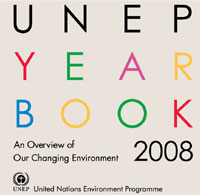
    An emerging Green Economy is seen in the United Nations Environment Programme's (UNEP) 2008 Year Book which indicates that growing numbers of companies embrace environmental policies and investors are pumping hundreds of billions of dollars into cleaner and renewable energies.

    Climate change, as documented in the Year Book, is increasingly changing the global environment from the melting of permafrost and glaciers to extreme weather events. It is also beginning to change the thinking, policies and actions of corporate heads, financiers and entrepreneurs as well as leaders of organized labour, governments and the United Nations itself.

    Increasingly, combating climate change is being perceived as an opportunity rather than a burden and a path to a new kind of prosperity as opposed to a brake on profits and employment, the new report shows.

    The UNEP Year Book 2008 says the emerging green economy is also driving invention, innovation and the imagination of engineers on a scale perhaps not witnessed since the industrial revolution of more than two centuries ago.

    It includes the growing interest in novel 'geo-engineering' projects such as giant carbon dioxide (C02) collectors that absorb greenhouse gases from the air rather like trees do during photosynthesis.

    "Based on technology used in fish tank filters and developed by scientists from Colombia University's Earth Institute, this method called 'air capture' can collect the C02 at the location of the ideal geological deposits for storage," says the report.

    Meanwhile scientists in Iceland and elsewhere are looking at injecting C02 into that country's abundant basalt rocks where it is claimed the pollutant reacts to form inert limestone. Similar "sequestration rocks" exist in geological formations across much of the world and may provide a safe and long term disposal option for the main greenhouse gas emissions.

    Elsewhere, scientists are helping to unravel both the uncertainties and the opportunities posed by the enormous quantities of methane trapped in the sea bed and in arctic permafrost.

    As a greenhouse gas methane is 25 times more potent than CO2 so the possibility of dramatic increases in methane emissions from these deposits is a global warming 'wildcard' - a growing source of concern.

    At the same time, if ways can be found of mining them safely and economically methane hydrates are a potentially large stockpile of clean-burning fuel.

    Despite a great deal of activity and action, formidable challenges remain if all these fledgling transformations are to be sustained and embedded in the global economy over the coming years and decades.

    Barriers include subsidies that favor fossil fuels over cleaner energies; tariff and trade regimes that make cleaner technologies more expensive and the risk-averse lending patterns of banks and other financial institutions when it comes to solar and wind power loans for poorer communities, the new report says.

    The Year Book's findings were presented on February 20, 2008 at UNEP's Governing Council/Global Ministerial Environment Forum. with the theme "Mobilizing Finance for the Climate Challenge". It is the largest gathering of environment ministers since the climate convention meeting in Indonesia late last year which gave birth to the Bali Road Map. The Road Map is the climate negotiation agreement scheduled to be completed by the climate convention meeting in Copenhagen in 2009 in order to deliver a post 2012 climate regime.

    The ministers, joined by senior figures from the worlds of business, organized labour, science and civil society, were attending.

    Achim Steiner, UN Under-Secretary General and UNEP Executive Director, said: "Hundreds of billions of dollars are now flowing into renewable and clean energy technologies and trillions more dollars are waiting in the wings looking to governments for a new and decisive climate regime post 2012 alongside the creative market mechanisms necessary to achieve this."

    "Formidable hurdles remain as to whether these funds will ultimately seek out new, climate-friendly investments for the future or whether they will seek the lowest common denominator by flowing into the polluting technologies of the past," he said.

    "… I am optimistic that we can shift gears to a Green Economy. If humans can go to the Moon; submarines sent under the Arctic; liver and heart transplants perfected; the mysteries of the human genome deciphered and tiny nano-machines designed then managing a transition to a low carbon society must be within humanity's grasp and intellect," he added.

    Some Key Findings

    The findings here are based on the UNEP Year Book 2008 with some additional supporting facts and figures from documents prepared by UNEP for the Governing Council/Global Ministerial Environment Forum..

    Responsible Investing Takes Off

    The UNEP Year Book, an annual report requested by ministers, underlines some of the elements of a Green Economy which are already falling into place.

    Corporate Social Responsibility (CSR) reporting including environmental concerns is now found among corporations in over 90 countries with the number of such statements mushrooming from virtually zero in the early 1990s to well over 2,000 now.

    • The Investor Network on Climate Change, launched in November 2003, now has some 50 institutional investors with assets of over $3 trillion.
    • The Principles for Responsible Investment, jointly facilitated by UNEP's Finance Initiative and the UN Global Compact in 2006, now has 275 institutions with $13 trillion of assets.

    Many companies now perceive that 'going' Green also improves their bottom line. The Year Book 2008 underlines a study by the investment bank Goldman Sachs.

    A survey of companies in six sectors-ranging from mining and energy to food and media-indicates that those with pioneering environmental, social and governance strategies are out-performing the general stock market by 25 per cent.

    Over 70 per cent out-perform their peers in similar sectors, the Year Book 2008 notes.

    Meanwhile a survey of some 150 companies with CSR strategies in the United States as well as France, Germany and the United Kingdom underlines corporations' growing environmental priorities.

    Cutting greenhouse gas emissions and boosting energy efficiency ranked number one among 54 per cent of those questioned followed by recycling, 52 per cent and waste reduction, 27 per cent.

    Bottom of the list are 'making shipping and transport more efficient and eco-friendly, eight per cent; environmental education and research, seven per cent and supporting employees use of alternative transportation, six per cent.

    Industrial Emission Reductions Remain Mixed

    Meanwhile, some of the globe's most carbon-intensive industries are leading the way in publicly disclosing their carbon footprint under an eight year-old initiative called the Carbon Disclosure Project.

    Disclosure is seen as one powerful route towards companies taking responsibility and acting to reduce their emissions.

    The Project, aimed also at empowering shareholders to better understand the current and future economic risks facing the companies they support, estimates that:

    • Close to 80 per cent of the Financial Times 500 corporations are disclosing their carbon performance.

    • Over three quarters of those who are disclosing such information are now also implementing greenhouse gas reductions via direct emissions reductions or via the emerging carbon markets. This is up from nearly half the year before.

    • The highest rate of achievement in terms of carbon disclosure is among the carbon-intensive industries such as metals, mining and steel sectors alongside oil and gas and the power sector.

    The Year Book 2008 indicates that despite these promising steps, more needs to be achieved.

    A survey by Innovest, a research company whose findings are in the report, shows that some sectors are making in-roads into greenhouse gas emissions.

    These include electric power companies in North America, international automobile manufacturers and metals and mining companies. But other sectors appear to be either treading water or seeing emissions continue to rise including oil and gas and chemicals.

    Carbon Markets

    The best known carbon markets are those established under the Kyoto Protocol of the UN Framework Convention on Climate Change (UNFCCC).

    These include International Emissions Trading; Joint Implementation and the Clean Development Mechanism (CDM).

    The CDM allows industrialized countries to offset some of their domestic emissions via cleaner and renewable energy schemes alongside afforestation and reforestation projects in developing countries.

    As of November 2007, over 850 projects had been registered in close to 50 countries worth just over $1 billion in what are known as certified emission reductions.

    A further $1.4 billion are in the pipeline and the CDM could, if fully exploited eventually trigger investment flows for some $100 billion from North to South.

    A recent survey of the CDM, published in the Year Book, indicates that close to 30 per cent of such projects are currently aimed at tackling the refrigerant by-product HFC-23 followed by:-

    • Reductions in the nitrous oxide gas adipic acid, 10 per cent
    • Waste methane from landfills into electricity, 11 per cent
    • Biomass fuels, seven per cent
    • Wind power, installation of combined gas turbines and hydro-power six per cent each
    • Emissions reductions from oil-fields and coal mining, four per cent each.

    The Year Book also chronicles the rise of voluntary emission reduction markets such as the Chicago Climate Exchange and the Over the Counter offsets.

    The Chicago exchange now has over 330 companies, cities, states and other participants despite the decision of the United States not to ratify the Kyoto Protocol. And while it is deemed a voluntary exchange, those involved are required to sign legally-binding contracts.

    Since 2003, the volume of carbon traded has risen from zero to around 20 million tonnes of carbon dioxide equivalent by 2006. The exchange is also involved in a wider suite of offsets when compared with the formal Kyoto-inspired markets.

    For example, participants in the Chicago exchange can invest in reducing emissions from livestock and animal wastes including biogas; agricultural soil carbon sequestration and grass planting; urban tree planting and forest conservation projects.

    The voluntary Over the Counter offsets market is also evolving after suffering a measure of criticism and concern that some projects were flawed, counter-productive or even environmentally and socially-damaging.

    "Schemes are emerging to guarantee to purchasers that carbon offsets represent genuine emission reductions, without harmful environmental side effects," says the Year Book.

    The Voluntary Carbon Standard was introduced in November 2007 and is endorsed by the International Organization for Standards under its ISO 14064 and ISO 14065 series.

    The latest figures indicates that the total voluntary carbon market was, in 2006, worth around $90 million with most projects in North America and dominated by forestry schemes, followed by Asia where the lion's share of projects are for renewable energies.

    This compares with close to $30 billion from the formal Kyoto markets and mechanisms in the same year.

    Payments for Ecosystem Services

    The formal and voluntary carbon markets are triggering new market mechanisms for including the carbon removing value of forests alongside other benefits such as water management, biodiversity conservation and the preservation of traditional livelihoods.

    Some countries and communities are already pursuing these multiple goals under the voluntary markets by finding buyers interested in more than just carbon.

    The Year Book cites the case of the Grupo Ecologico Sierra Gorda and the organization Bosque Sustentable of Mexico. In 2006, they completed a sale of land to the United Nations Foundation which was keen to reduce its carbon footprint via a project that will also alleviate poverty.

    A similar sale is the final stages to the World Land Trust, a UK-based organization who will be selling the Sierra Gorda Carbon and Environmental Offsets to a range of European buyers.

    These developments are also underlined by a project funded by the Government of the Netherlands in Tanzania called Kyoto: Think Global, Act Local.

    The project has involved training people on hand-held Geographic Information Systems in order to assist local forest communities estimate the amount of carbon being sequestered by their trees.

    Each village forest was found to be sequestering 1,300 tonnes of carbon per year-equivalent to an income of $6,500 per village per year at the then prevailing market price for carbon.

    By bundling in the added value of water and biodiversity conservation, the actual incomes could be even higher.

    The chance to realize such incomes is becoming a growing possibility. Late last year, the World Bank announced the Forest Carbon Partnership Facility to conserve standing forests and to begin avoiding the estimated 20 per cent of global greenhouse gas emissions from deforestation.

    A further development emerged at the Bali climate convention in December 2007 when Norway announced $2.7 billion of funding for Reduced Emissions from Deforestation and Degradation (REDD).

    Adapting Insurance to Vulnerability

    Creative market mechanisms are also emerging to try and deal with adaptation to climate change.

    Extreme weather events are on the rise and are likely to become more prevalent in a climate constrained world. Yet many of those at risk have little access to formal insurance markets.

    The Year Book cites a new study by Munich Re, one of the world's leading re-insurance companies. This estimates that cover for catastrophic events such as hurricanes and storm surges, is virtually non-existent for billions of people in Africa, Asia and Latin America and the Caribbean.

    "Of the 2.5 billion people world-wide who have less than two dollars a day at their disposal, it has been estimated that only ten million are able to purchase insurance," says the report.

    Some developments are underway however including micro-insurance. In Africa, pilot projects that pay out to farmers when rainfall drops below a key threshold, are being tested.

    • For example the UN's World Food Programme have partnered with the re-insurer AXA to develop weather derivatives that pay out to Ethiopian farmers in the event of severe drought.
    • Swiss Re, a member of the UNEP Finance Initiative, has launched a Climate Adaptation Development Programme to provide financial protection to up to 400,000 people in 10 countries in Africa from drought.

    The UNEP Year Book 2008 concludes that "for new developments to reach the scale and scope that is needed, governments must play a stronger stimulation and facilitation role".

    Some of the Measures That Governments Might Wish To Consider Include

    Subsidies

    • Removing fossil fuel subsidies could reduce C02 emissions by five to six per cent annually. Currently, fossil fuel subsidies amount up to $200 billion a year versus support for low-carbon technologies of an estimated $33 billion annually.

    Research and Development (R+D)

    • Boosting research and development. The International Energy Agency estimates that R+D for low emission innovations such as renewables and energy savings declined by 50 per cent between 1980 and 2004.
    • In order to achieve a C02 stabilization target of 550 parts per million, support for innovation needs to rise from just over $30 billion to $90 billion by 2015 and to $160 billion by 2025 according to some experts.

    Energy Savings

    • Increase global targets for energy efficiency improvements to 2.5 per cent annually.
    • These should be supported by policies including stronger energy savings building codes for new and existing structures; penalties or disincentives for builders to choose the cheapest, least energy efficient designs, materials and gadgets; policies that promote mass transit especially rail and international minimum performance standards for industrial and household appliances.
    • Other measures include the promotion of utility pricing that favours energy efficiency; promotes combined heat and power and improves energy savings in existing power plants and electricity transmission infrastructure.

    Renewables

    • Policies that increase the uptake of renewables may include 'feed-in laws' that guarantee a fixed price for each unit of renewable electricity generated; regulations that boost access to the Grid; incentives for second generation biofuels and ones that address other barriers including resource mapping-UNEP/GEF's Solar and Wind Energy Resource Assessment is a good example of the latter.
    • Government agencies and donors need to develop and deploy new forms of 'end-user' credit schemes to assist consumers to purchase climate mitigation technologies and systems.
    • New approaches are needed to assist small to medium-sized enterprises innovate including enterprise development services and seed capital.
    • Attention needs to be paid to new financial and regulatory solutions that address the lack of local currency financing in least developed economies-this is effectively shutting out such economies from low C02 emitting infrastructure developments.
    • The 'green procurement' potential of local authorities needs to be harnessed through financial incentives that stimulate voluntary low carbon investments.

    Adaptation

    • Public investments are needed to mobilize finance for adaptation given that market mechanisms are in their infancy.
    • Other actions for adaptation include regulations to limit the vulnerability of new investments and infrastructure such as bans on building in flood prone areas and new, labour intensive, programme to 'climate proof' rural areas that improve resilience of local populations; address poverty; boost incomes and increase the skills base.

    Notes:

    The UNEP Year Book 2008 can be found at www.unep.org

    It can be purchased at Earthprint www.earthprint.com and is available in all six official UN languages (Arabic, Chinese, English, French, Russian and Spanish)

    Contacts:

    Nick Nuttall, UNEP Spokesperson and Head of Media

    Tel:+ 254-20 7623084

    Cell: +41 79 596 57 37

    nick.nuttall@unep.org

    Robert Bisset, UNEP Spokesperson for Europe

    Tel: +33 6 2272 5842

    robert.bisset@unep.fr

    Mr. François Chantrait, Directeur. Centre de Presse

    pnue2008.press@gouv.mc

    Jim Sniffen, Information Officer

    UN Environment Programme New York

    tel: +1-212-963-8094/8210

    info@nyo.unep.org

    www.nyo.unep.org

    The preceding report is based on a UNEP press release of February 20, 2008 and on a UNEP report to ministers that can be found under Official Documents http://www.unep.org/gc/gcss-x/info_docs.asp.

    Note:

    References:

    Bali and Beyond:Towards a Low Carbon Society
    UN Climate Convention - 2 to 14 December 2007

    UNEP Sustainable Energy Finance Initiative (SEFI)